April 2026, Vancouver.
The city was caught in its briefest and most beautiful moment of the year. Outside the convention center, the cherry blossoms along the seawall were at their peak — pale pink petals drifting on the Pacific wind, settling on the shoulders of suited security personnel, on the temporarily closed streets, and into the grey-green water of the bay, where they vanished without a sound.

The G7 Summit was entering its second day.
The agenda carried the familiar anxieties of the age: trade barriers, climate commitments, AI regulation, China policy. Leaders shook hands for cameras, argued behind closed doors, and exchanged their real opinions in undertones during breaks.
Migration had been placed last on the afternoon agenda. No one expected much from it.
The subject had been discussed for thirty years. Every discussion began with “we attach great importance” and ended with each country doing as it pleased.
The President of the European Commission opened with a single sentence:
“This time, we have a different proposal. Please allow my assistant, Marcus Lim, to give a brief presentation.”
The polite, weary sound of translation earpieces adjusting filled the room.
Several leaders glanced down at the project summary just placed before them.
The first page carried a speaker bio:
Marcus Lim
Senior Assistant to the President of the European Commission
Born in Singapore
BA in Political Science, National University of Singapore
MSc in Public Policy and Management, London School of Economics
Long-term researcher in transnational migration and urban governance
Most flipped through it only briefly. They had seen too many impressive CVs.
Marcus Lim rose, walked to the screen, and opened his laptop.
The first slide contained three words:
The Third Option.

Marcus scanned the room and began:
“For the past thirty years, we have been paying for the same problem: the resettlement of undocumented migrants arriving in large numbers.
“Either we extend generous support through our social welfare systems, or we do everything we can to keep them out — or send them back.
“Both approaches cost a fortune. Neither has solved anything.”
He advanced to the next slide.
A set of figures appeared on the screen.

“In 2025, Germany alone spent 24.8 billion euros in federal expenditure on refugees and migrants.” He paused for a beat. “That was after a year-on-year decrease.”
He moved to the next slide.
“The United States spends more than Europe,” Marcus said, without looking in that direction. “The immigration enforcement budget passed by Congress in 2025 exceeded 34 billion dollars. ICE alone — a single agency — had a detention budget of over 14 billion dollars. That is nearly twice the entire federal prison system.”
Someone in the room gave a quiet cough.
“Germany’s 24.8 billion euros. America’s 34 billion dollars. And that’s before counting the individual expenditures of other EU member states, Canada, and Australia.”
Marcus said. “The money we spend on this problem every year is enough to build a new Singapore.”
He closed the data slide. The screen now held a single line:
“Far less spent. Far more achieved.”
“Which is why I’m proposing a third option — one that requires far less capital investment than either of the first two, and delivers far greater returns.”
“Why greater returns?
“We have long treated these migrants as a burden. Some countries have even shipped them off to underdeveloped nations in Africa — a practice that has triggered humanitarian crises and done serious damage to the West’s moral standing.
“The truth is, the vast majority of migrants who abandon everything familiar, cross oceans and deserts, and arrive in a country they’ve never known — they do so for the same reason as the rest of us: they have a dream. They want a better life.
The fact that they were willing to endure hardship, danger, and uncertainty to get here already speaks to an extraordinary pioneering spirit — and a resilience in the face of the unknown that most people will never be tested for.”
He paused, and advanced to the next slide.

On the left side of the screen, three Chinese characters appeared in large type: 过江龙. To the right, a few lines of English explanation in smaller text.
Someone in the room tilted their head slightly.
“There is a Chinese expression,” Marcus said — he did not explain the pronunciation — “Guò jiāng lóng. Literally: the dragon that crosses the river. It describes someone who leaves their own territory, crosses over, and carves out a place for themselves on the other side.
The phrase carries a note of wariness — and a note of respect — because the dragon who crosses the river is usually more driven than the locals. They have no way back.”
“We call these people ‘undocumented migrants.’ Some call them ‘illegal migrants’. But if we changed the word — if we changed the way we look at them — ”
He slowed his pace.
“These are human resources. They are not a surplus population. They are the raw material of every great construction in human history.
“America was built by migrants. Canada was built by migrants. Australia was built by migrants. So were New Zealand and Singapore.
“Everything we have today was left to us by people who were turned away somewhere else.
“We should stop treating these people as a problem to be detained and deported. We should treat them as people. As a resource. We should give them an opportunity: find them a place, establish a framework, and then watch them create something extraordinary — a brand new special economic zone.”
Before he could finish, a voice came from the other end of the table.
It was the British Prime Minister, “Where exactly would you find this place?”
He made no effort to conceal the skepticism in his tone.
“Sir, this sounds very appealing. But there is no unclaimed land on earth sitting empty, waiting for us to run an experiment.”
The French and Italian representatives murmured in agreement. The German, Canadian, and Japanese delegations smiled but said nothing.
The American President, seated in the middle, was expressionless. His eyelids had been drooping throughout — a look of fatigue that left no one quite certain whether he was dozing or thinking.
Marcus did not rush to answer.
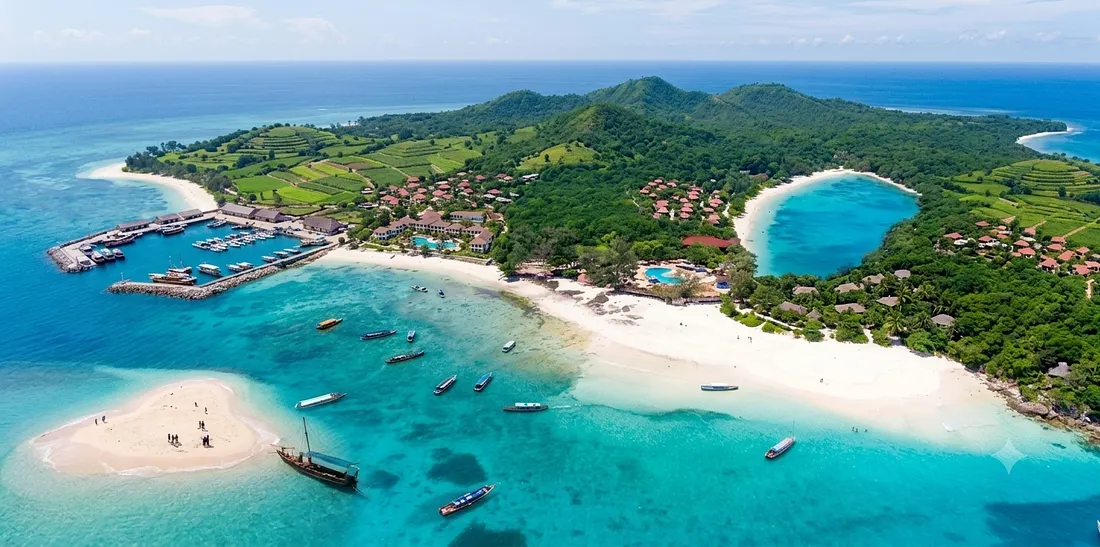
He opened a map of the South Pacific on the screen, zoomed in east of Australia and New Zealand, and in the expanse of blue, a scattering of islands appeared — shapes of varying sizes, names unfamiliar to most in the room.

“There is.” He said. “The waters around Australia and New Zealand contain a large number of remote, undeveloped islands that have sat largely unused for decades. Many fall within Australian and New Zealand jurisdictions; others belong to various small Pacific nations.
“Our proposal is to identify one such island whose sovereign nation is willing to enter into a long-term lease arrangement, and establish a self-governing special zone. Sovereignty remains with the host nation, under a long-term lease agreement that grants the special zone administrative autonomy.
“The island’s distance from the Eurasian and American continents means migrants can physically leave behind the chaos of their origins, and that chaos cannot easily follow them here.
“Funding nations — including the EU, the United States, Canada, and any other willing partners — would contribute according to the number of residents they send, drawing from existing migration resettlement budgets in the form of interest-free loans, supplemented by external donations and investment.
“Construction contracts would be open to competitive tender from participating nations’ companies. Together, they would build a modern, livable special economic zone from the ground up — infrastructure, education systems, legal frameworks, all of it.
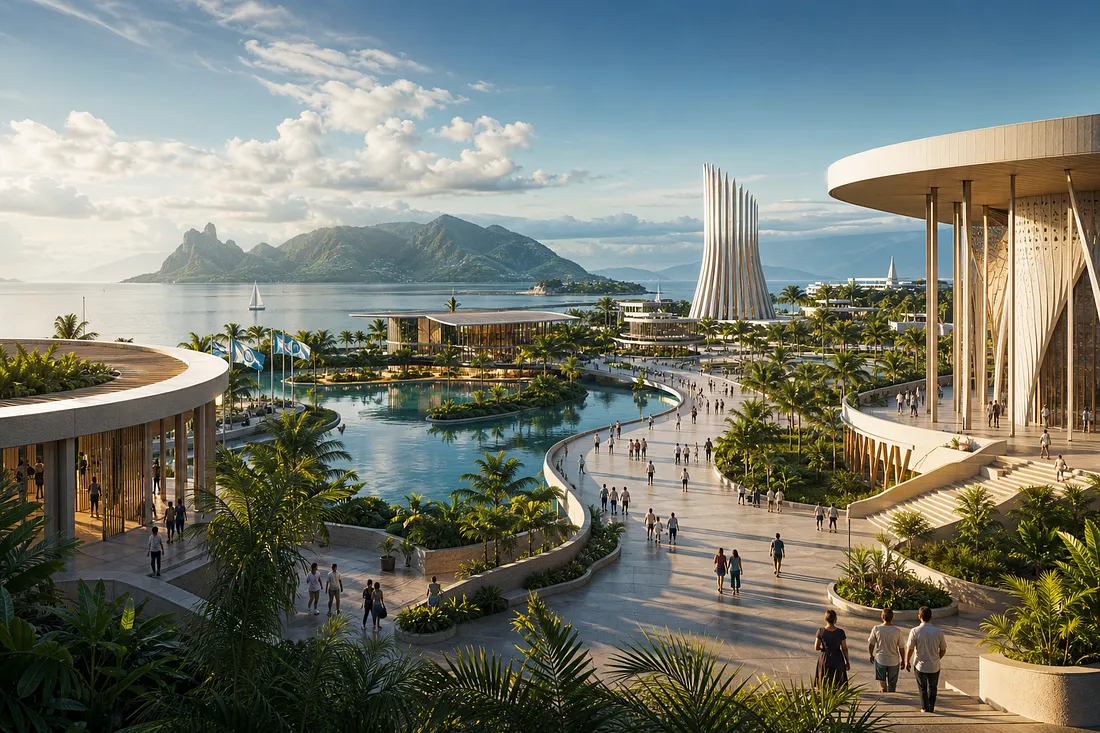
“This is not a detention facility. This is a special economic zone. A self-governing community. A place for people who are willing to start over.
“Ten years from now, it will be the most significant talent reservoir in the Western world — and an emerging market in the Pacific that no one can afford to ignore.”
The Australian Prime Minister, who had been invited as an observer, raised an eyebrow: “Interesting. Go ahead.”
The Japanese Prime Minister said, thoughtfully: “There are also a number of islands along the American coastline — perhaps more convenient to administer from a logistical standpoint. Was there a reason those weren’t considered?”
A brief silence fell over the room.
The American President opened his eyes fully for the first time.
“No.” He said, with uncharacteristic bluntness. “Too close to the United States. They’d be coming over by boat again. We don’t want them.”
A few delegates kept their faces carefully neutral. Others glanced sideways. No one responded.
Marcus said, evenly: “Adding a new emerging economy in the Southern Hemisphere would better serve the balance of global economic development. For Australia and New Zealand in particular, the long-term strategic benefits — in terms of talent pipeline and market expansion — would be considerable.
“More importantly, the South Pacific has long lacked a regional growth engine of any real scale. Many island nations remain heavily dependent on tourism, resource exports, and international aid — structurally vulnerable, with limited resilience to external shocks.
“If a new economy were to take root in the region — one with a modern industrial base, a higher education system, and complete infrastructure — it would not only generate its own growth, but serve as a training hub, a channel for technology and capital, and a regional trade center for surrounding nations.
“What we are proposing to build is not just a new city. It is a growth engine capable of lifting the entire South Pacific.”
“Finding a suitable island and a host nation willing to enter into long-term partnership will be the first step toward making this a reality. That work can begin the moment we leave this room.”
The American President cut in again: “If the Aussies are game, we could sort that out right now.”
The Australian Prime Minister turned slowly to look at him, then smiled. “Mr. President, that’s not a decision I can make on my own.”
Laughter spread around the table.
The Italian Prime Minister looked around the room with obvious interest.
“Before we find this place — why don’t we give it a name?”
“I like that,” said the French President. He rested his left elbow on the armrest, chin in hand, as if considering.
The American President said, with mild disinterest: “Call it whatever you want. Trust me, my name would be the best for it — but I know you people won’t go for that. So, I don’t really care.” He closed his eyes again, as if he’d gone back to sleep.
The delegates exchanged glances. No one said a word.
The French President lifted his hand from his chin, leaned forward slightly, and looked around the table.
“Beaupays?” he offered. “Beautiful land.”
The Canadian Prime Minister asked quietly: “Beautiful country?”
The Australian Prime Minister responded immediately: “No — we don’t want a new country appearing next door.”
A few faces around the room struggled to suppress smiles. No one laughed aloud.
The Canadian Prime Minister’s mouth curved upward. “Beauville?” He said. “Beautiful town?”
The British Prime Minister nodded. “I rather like that. In Greek, Plato named his ideal city-state Kallipolis — the beautiful city. Calling this new migrant community Beauville might make it our modern Kallipolis.”
Several delegates nodded in agreement.
The President of the European Commission looked at Marcus. “Marcus — note that down. From now on, we’ll call this Project Beauville.”
Marcus typed for a moment. A title-card slide appeared on the screen:
PROJECT BEAUVILLE
“That is a very beautiful name,” he said. “I always learn something new from all of you.”

Marcus advanced to the next slide. The heading read:
Two Approaches, Both Failing